
Portugal Expert®
September , 2026
There are places in Portugal where history is something you see.
And then there are places where history feels like it is still part of everyday life.
Located in central Portugal, just a little over an hour and a half from Lisbon, Tomar is often overlooked by international visitors rushing between Portugal’s better-known destinations. Yet this small historic city offers something remarkably different: the opportunity to step into a chapter of Portuguese history shaped by knights, kings, religion, exploration and centuries of cultural transformation.
For travelers looking to experience Portugal beyond the crowds, Tomar is exactly the kind of place worth discovering.
And perhaps the most fascinating part is that you do not need to travel to a remote corner of the country to find it.
You simply need to take a different road.
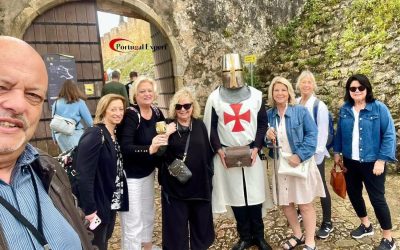
Tomar’s story is deeply connected to the Knights Templar.
The city was founded in the 12th century by Gualdim Pais, a Portuguese knight and Grand Master of the Knights Templar, during the reign of King Afonso Henriques, Portugal’s first king.
The Templars were entrusted with defending the young Portuguese kingdom and its borders during the Christian Reconquista. Tomar became one of their most important strongholds.
Their presence is still visible today.
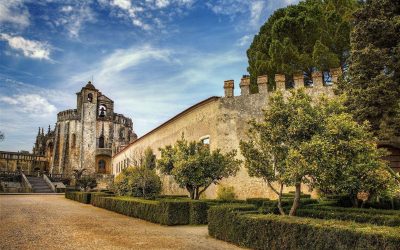
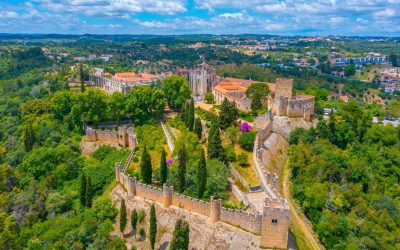
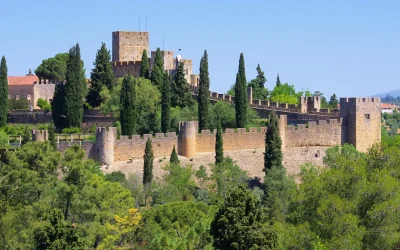
Above the city stands the Castle of Tomar and the Convent of Christ, an extraordinary complex that tells the story not only of the Templars but also of the evolution of Portugal itself.
This is one of those places where understanding the history completely changes the experience.
Without context, you see an impressive medieval monument.
With context, you begin to understand why it exists.
The Convent of Christ is undoubtedly the centerpiece of any visit to Tomar.
Originally established by the Knights Templar, the complex evolved over several centuries, reflecting the changing political, religious and artistic identity of Portugal.
Walking through its courtyards, cloisters and monumental spaces, you can see layers of history rather than a single architectural style.
Romanesque.
Gothic.
Manueline.
Renaissance.
Each period left its mark.
One of the most remarkable elements is the Charola, the famous circular Templar church inspired by the Church of the Holy Sepulchre in Jerusalem.
For many visitors, this is the moment when Tomar suddenly makes sense.
The Templars were not simply warriors passing through Portugal.
They were part of a much larger European and Mediterranean story.
And Tomar was one of their most important homes.
One detail deserves particular attention: the extraordinary Manueline window on the exterior of the convent.
At first glance, it is simply an elaborate piece of Portuguese architecture.
But look more closely.
The decoration is filled with maritime and natural motifs ropes, vegetation, trunks and other elements that reflect the extraordinary period in which Portugal was expanding its influence across the oceans.
This is one of the things I love about Portuguese heritage.
A building can tell several stories at the same time.
The Templars belong to medieval Portugal.
The Manueline style belongs to the great maritime age.
And both stories meet in the same monument.
One of the mistakes visitors can make is treating Tomar as a quick stop for the Convent of Christ.
The monument is spectacular, but the city below deserves time as well.
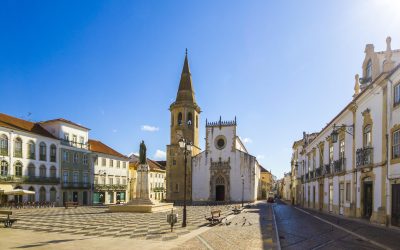
Walk down into the historic center and the atmosphere changes.
The streets become quieter.
Small squares open between the buildings.
Traditional houses reveal details that are easy to miss when you are moving too quickly.
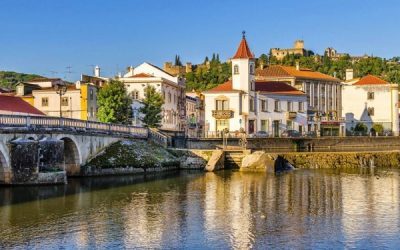
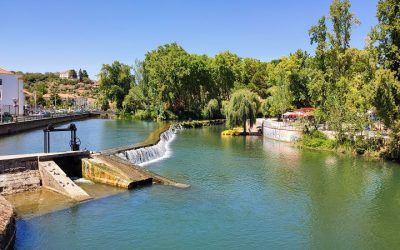
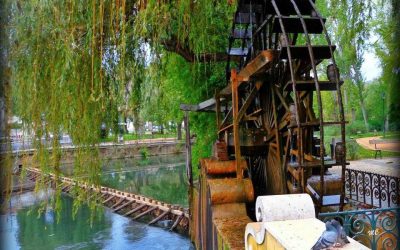
And eventually, you reach the Nabão River.
The river has always been central to Tomar’s identity, providing the city with a natural axis and contributing to its development over the centuries.
This is where I recommend slowing down.
Sit for a moment.
Walk beside the water.
Look back towards the historic city.
Portugal is often at its most enjoyable when you stop trying to see everything.
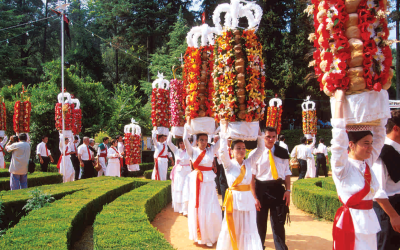
If you happen to visit Tomar during the Festa dos Tabuleiros, you will discover another side of the city entirely.
Held traditionally every four years, this extraordinary festival transforms Tomar into a celebration of colour, tradition and community.
The streets are decorated with flowers, and women carry tall trays, the famous tabuleiros , balanced on their heads.
It is spectacular to see.
But what makes the festival particularly interesting is that it is not simply a performance created for visitors.
It is deeply connected to local traditions and community identity.
That distinction matters.
There is a difference between watching a cultural show and witnessing a living tradition.
Tomar gives you the opportunity to experience the latter.
History is only part of the experience.
Tomar also has its own culinary identity.
One of the local specialties worth discovering is Fatias de Tomar, a traditional dessert made with egg yolks and sugar.
It is simple, distinctive and deeply connected to the city.
And, as with so much Portuguese cuisine, the best experiences are often not about finding the most famous restaurant.
They are about finding the right place.
A small local restaurant.
A family-run establishment.
A table where the food is prepared without trying to impress tourists.
This is where traveling with someone who knows the region can make a difference.
Portugal has become increasingly popular with travelers from North America.
That is wonderful.
But popularity also means that some destinations can become crowded, particularly during the high season.
Tomar offers another possibility.
You can still experience extraordinary heritage without feeling that you are following the same itinerary as everyone else.
You can explore a medieval castle.
Stand inside a former Templar church.
Walk through a historic town.
Enjoy the river.
Taste traditional food.
And, most importantly, have the time to understand what you are seeing.
That is what Beyond the Crowds is really about.
It is not about avoiding famous places simply because they are famous.
It is about going one step further.
Looking beyond the obvious.
Choosing experiences that feel more connected to the country itself.
For travelers visiting Portugal for the first time, Tomar can work beautifully as part of a wider itinerary.
It can be combined with other historic destinations in central Portugal, creating a journey that moves beyond the classic Lisbon – Sintra – Porto route.
And for travelers who have already visited Portugal once or twice, Tomar becomes even more interesting.
Because returning to Portugal does not have to mean repeating the same trip.
There is always another layer.
Another region.
Another story.
Another road.
And sometimes, the most memorable experiences are found in places you almost did not include in the itinerary.
As a private Driver Guide, I have always believed that showing Portugal is about much more than taking people from one attraction to another.
It is about understanding what makes a place special.
Sometimes that means arriving early.
Sometimes it means taking the scenic road instead of the fastest one.
Sometimes it means stopping for a coffee in a town that was never on the original itinerary.
And sometimes it means spending a little longer in a place like Tomar because the story deserves it.
That is the difference between simply visiting Portugal and experiencing it.
Tomar may not be the first destination that appears when you search for Portugal.
And that is precisely why I think you should consider it.
Because beyond the crowds, there is another Portugal waiting to be discovered.
And in Tomar, that Portugal comes with stone walls, Templar crosses, centuries of history — and a story that is still very much alive.
If you are planning a private journey through Portugal and would like to discover places such as Tomar away from the standard tourist routes, I would be happy to design a tailor-made itinerary around your interests, pace and travel style.
Portugal is not only about where you go.
It is about how you experience it.
A truly personalized experience.
Until next time,
Vitor Pais