Portugal Expert® Travel Journal
Beyond the Crowds: The Forgotten Castles of Portugal

Portugal Expert® Travel Notes – Edition #8
Hello from Portugal,
When most travelers think about castles in Portugal, a few famous names usually come to mind.
Sintra.
Óbidos.
Guimarães.
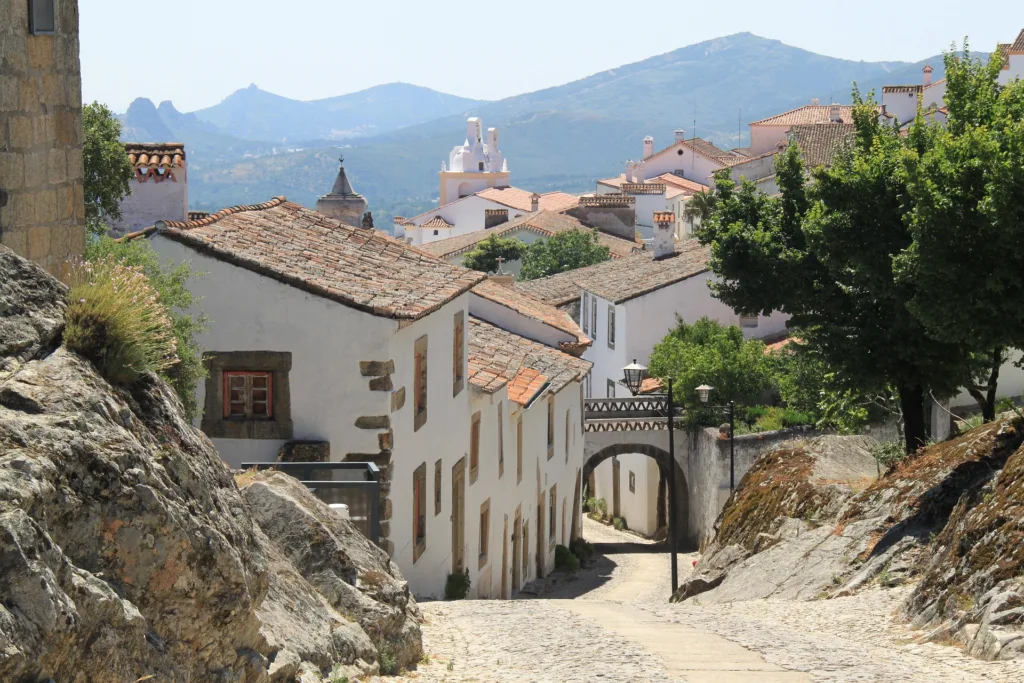
Perhaps the imposing walls of Marvão.
But Portugal has hundreds of castles, fortresses and medieval strongholds scattered across its landscape — many of them far beyond the usual tourist routes.
Some stand above tiny villages.
Others appear almost forgotten on remote hillsides.
Some are little more than ruins today.
And yet, these places can tell some of the most fascinating stories in Portuguese history.
This is the Portugal I love discovering.
Portugal beyond the crowds.
A Country Built on a Frontier
To understand Portugal’s castles, you first have to understand its geography.
Portugal may be a relatively small country, but for centuries its eastern and northern borders were places of conflict, expansion and defence.
As the Portuguese kingdom developed, castles became essential.
They protected towns.
They controlled important routes.
They watched the frontier.
And they provided refuge for local populations.
Many of these fortifications were built or strengthened during the Middle Ages, particularly during the period of the Christian Reconquista and the consolidation of Portugal’s borders.
Today, the conflicts are gone.
The strategic importance has disappeared.
But the castles remain.
Often surrounded by landscapes that have changed remarkably little.
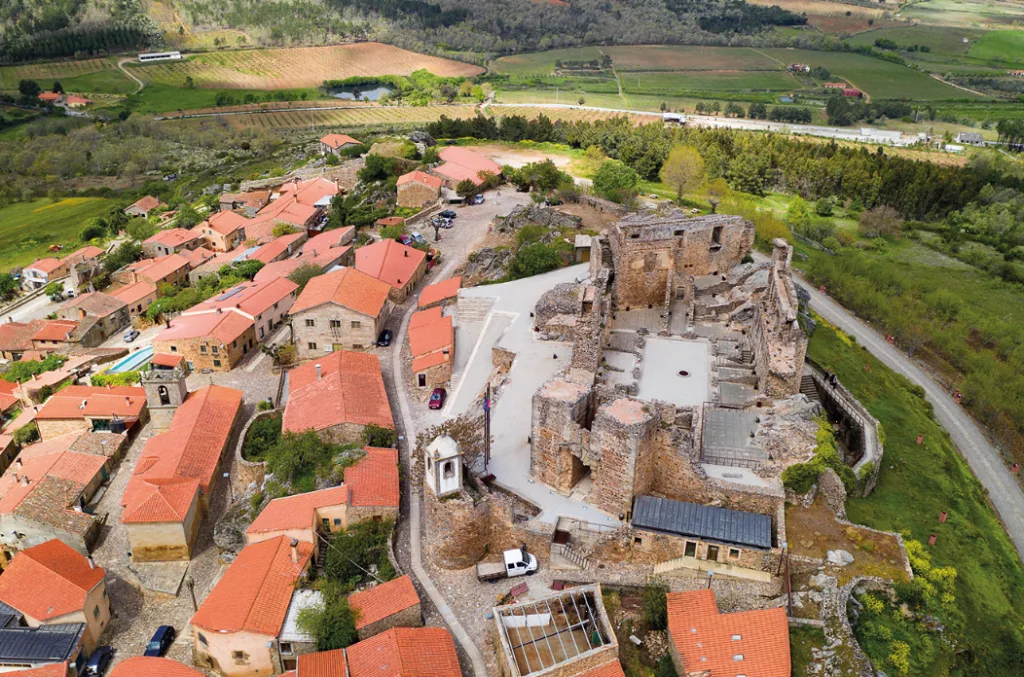
Sortelha: A Medieval Village Frozen in Time
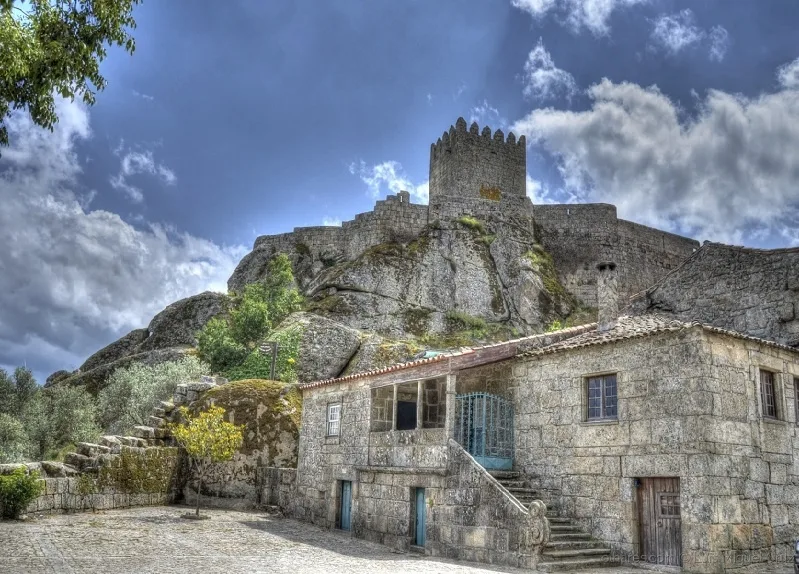
One of the finest examples is Sortelha, in Portugal’s Beira Interior.
Here, the castle is not simply an isolated monument.
It is part of the village.
Granite houses, narrow lanes and medieval walls create a remarkably cohesive historic landscape.
Standing on the castle walls, you can see why this location mattered.
The surrounding countryside opens towards the Spanish frontier.
Today, the view is peaceful.
Centuries ago, it was strategic.
Sortelha is a reminder that Portuguese castles were not built merely to look impressive.
They were built because the landscape demanded them.
And sometimes, the best way to understand a castle is to understand the land around it.
Marialva: A Medieval World in Stone
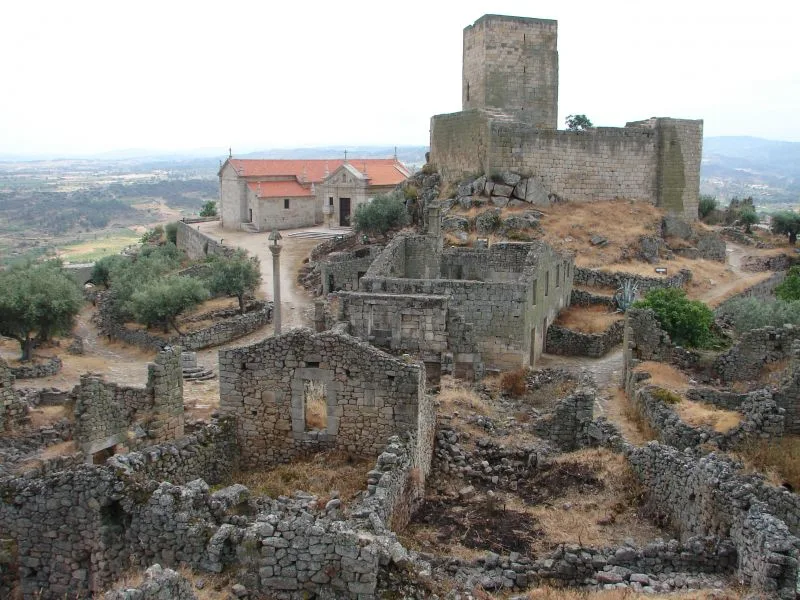
Not far from Sortelha lies another extraordinary place: Marialva.
Unlike Portugal’s most famous historic towns, Marialva can feel almost suspended in time.
Its medieval citadel rises above the surrounding landscape, surrounded by granite buildings and ancient defensive walls.
Walking through the old settlement, you can sense how different life must have been when the castle was at the centre of the community.
There is something wonderfully atmospheric about places like this.
There are no grand boulevards.
No modern attractions competing for your attention.
Just stone, landscape and history.
This is exactly why they belong in a journey beyond the crowds.
Almeida: The Fortress That Became a Town
Further north, close to the Spanish border, Almeida offers a completely different experience.
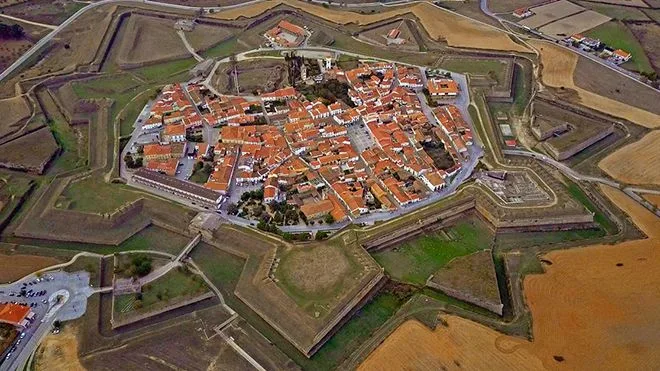
Its extraordinary star-shaped fortifications are among the most impressive military structures in Portugal.
From above, the geometry of the fortress becomes obvious.
But walking through it reveals something even more interesting.
This is not simply a castle preserved as a monument.
It is a living town built within a military landscape.
The streets, houses and defensive structures are interconnected.
The entire settlement tells the story of a time when warfare, politics and everyday life were inseparable.
For travelers interested in military history, architecture or simply unusual places, Almeida is one of Portugal’s great discoveries.
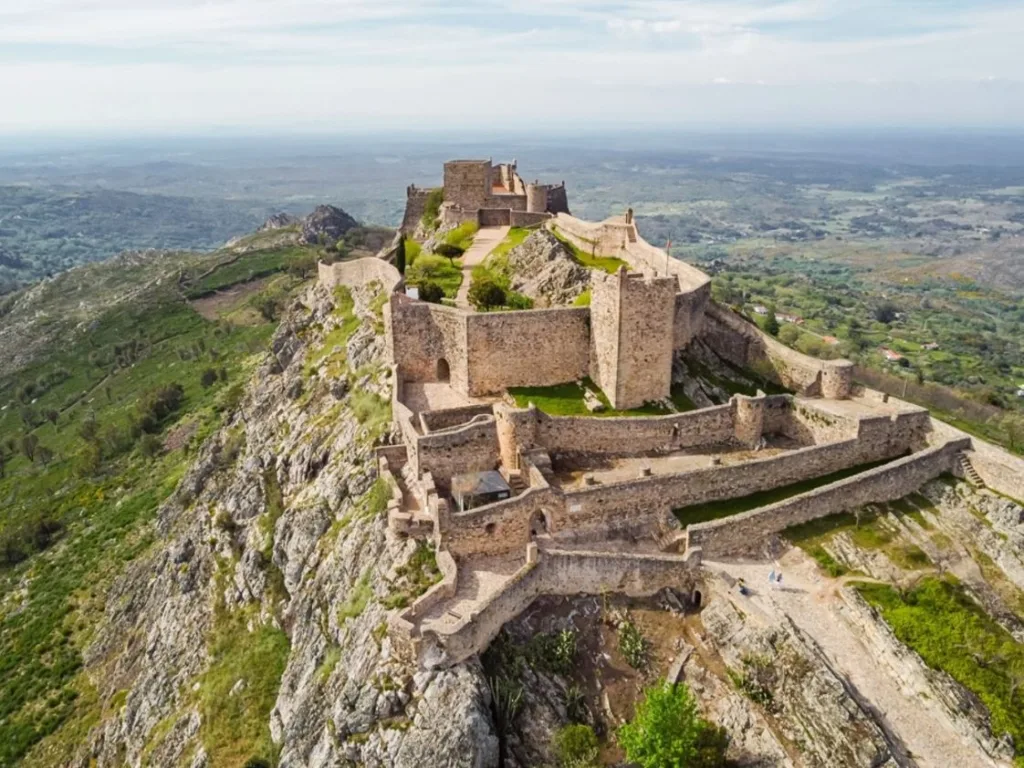
Marvão: A Castle Above the Clouds
Marvão is perhaps less forgotten than some of the others on this list, but its location makes it impossible to ignore.
Perched dramatically on the top of the Serra de São Mamede, the village and castle dominate the surrounding landscape.
The climb is part of the experience.
As you approach, the walls seem to emerge from the granite mountain itself.
And once you reach the top, the views are extraordinary.
On a clear day, you can see deep into the Alentejo landscape and towards Spain.
Marvão demonstrates another important characteristic of Portuguese castles:
Location was everything.
A castle could be difficult to attack simply because reaching it was difficult.
The landscape itself became part of the defence.
The Castles of the Border
Perhaps the most fascinating collection of lesser-known castles can be found along Portugal’s eastern frontier.
From the north to the Alentejo, a chain of fortifications once protected the kingdom from its powerful neighbour to the east.
Places such as Castelo Rodrigo, Castelo Mendo, Castelo Bom and Monsanto offer different interpretations of this frontier landscape.
Some are remarkably preserved.
Others are quieter, with only fragments of their former defensive structures remaining.
But together they tell a much bigger story.
Portugal’s borders were not always the peaceful lines we see on a modern map.
They were contested landscapes.
Communities lived with the possibility of conflict.
Castles were symbols of protection, power and permanence.
Castelo Rodrigo: History With a View
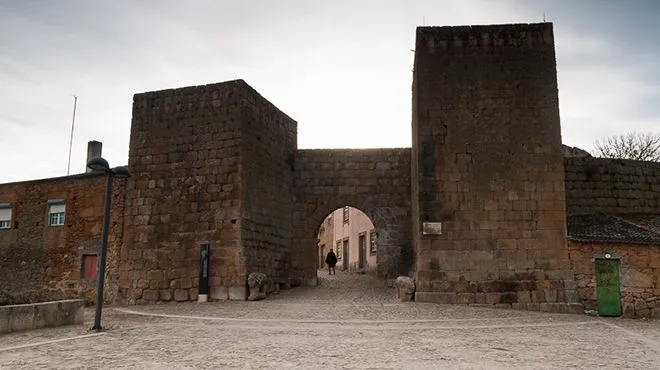
Castelo Rodrigo is particularly rewarding because of its combination of history and landscape.
The village sits high above the surrounding countryside, with views extending across the Côa Valley.
Its medieval walls and ruins reveal the strategic importance of the location.
But perhaps the greatest pleasure is simply walking.
Take your time.
Pass through the old streets.
Look at the stone houses.
Stop at the viewpoints.
Imagine what it would have been like to approach the settlement centuries ago.
There is no need for a long checklist.
The atmosphere is the attraction.
Monsanto: A Village Built Into the Rocks
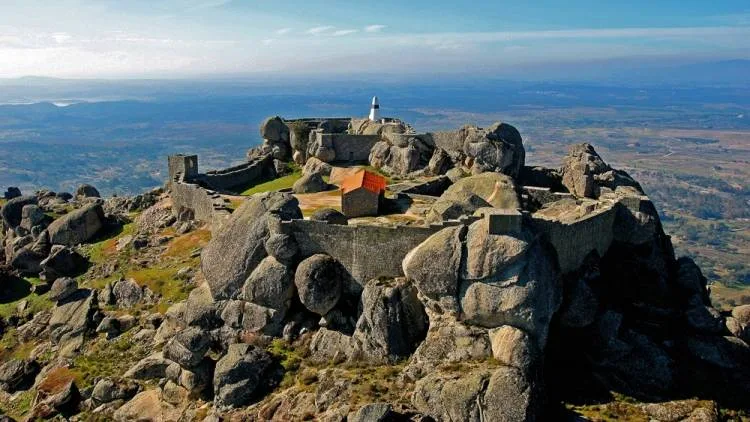
Then there is Monsanto.
Often described as one of Portugal’s most unusual villages, Monsanto seems to have been built directly into the granite landscape.
Huge boulders become walls, roofs and structural elements of houses.
The castle sits above the village, while the settlement climbs the hillside below it.
It is difficult to know where the natural landscape ends and the architecture begins.
That is precisely what makes Monsanto so memorable.
And while it has become more recognized internationally in recent years, it still offers something very different from the classic Portuguese itinerary.
What Makes These Castles Special?
It is not simply the architecture.
It is the combination of history and landscape.
Portugal’s lesser-known castles are often found in places where the journey matters almost as much as the destination.
You drive through open countryside.
Pass small villages.
Cross landscapes shaped by agriculture.
Then, suddenly, a castle appears on a hill.
That moment is difficult to reproduce in a conventional tourist itinerary.
It requires time.
It requires curiosity.
And sometimes, it requires taking the road that does not appear on the first page of a travel guide.
The Luxury of Having a Place Almost to Yourself
There is another reason I love these places.
Silence.
For many travelers from North America, the idea of luxury is naturally associated with beautiful hotels, excellent restaurants and private experiences.
I agree.
But there is another form of luxury that is becoming increasingly valuable:
Space.
Space to walk.
Space to photograph.
Space to think.
Space to experience a historic place without being surrounded by hundreds of other visitors.
Standing on the walls of a medieval castle with nothing but the landscape in front of you can be more memorable than standing in a famous monument surrounded by crowds.
That is a different kind of luxury.
These Are Not Ruins. They Are Stories.
It is easy to look at an old castle and see only stones.
But every wall represents a decision.
Every tower had a purpose.
Every strategic location tells us something about the people who lived there.
Who built it?
Who defended it?
Who attacked it?
Who lived inside its walls?
Why was the castle built in that particular place?
These questions transform a visit.
And this is where having a local guide can make such a difference.
The architecture gives you the visual experience.
The story gives it meaning.
These Are Not Ruins. They Are Stories.
It is easy to look at an old castle and see only stones.
But every wall represents a decision.
Every tower had a purpose.
Every strategic location tells us something about the people who lived there.
Who built it?
Who defended it?
Who attacked it?
Who lived inside its walls?
Why was the castle built in that particular place?
These questions transform a visit.
And this is where having a local guide can make such a difference.
The architecture gives you the visual experience.
Beyond the Crowds
Discover Portugal Beyond the Crowds
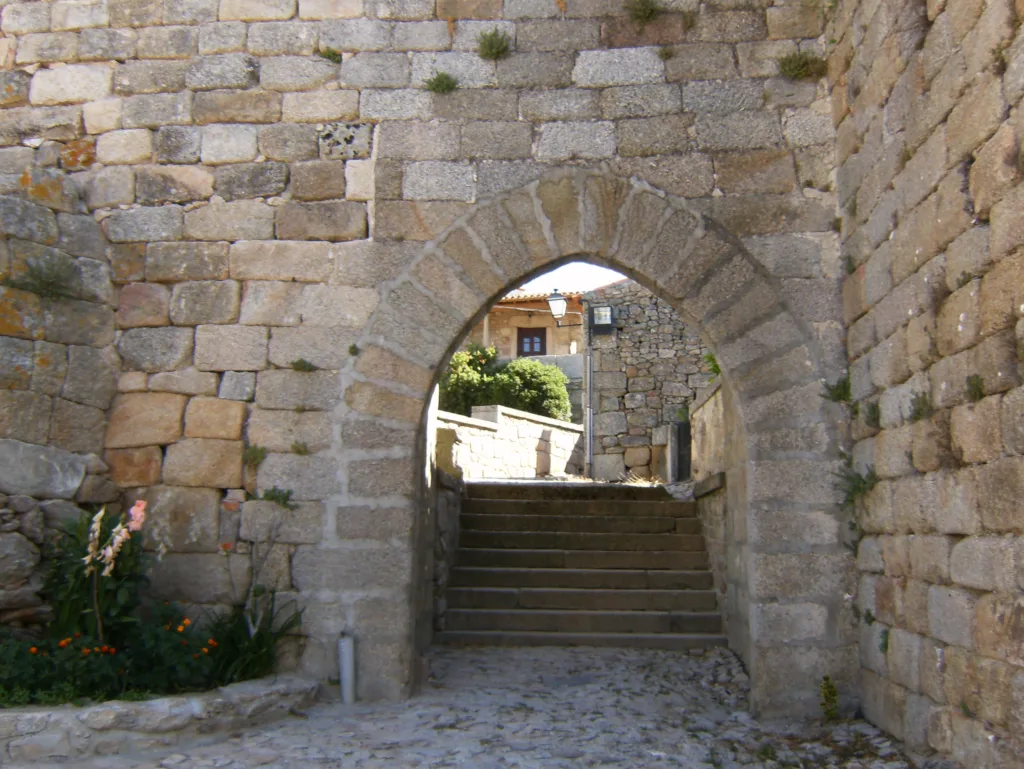
The forgotten castles of Portugal are not really forgotten.
They are simply waiting for travelers willing to look beyond the obvious.
They tell the story of a country that spent centuries defining itself — defending its borders, building communities and transforming a rugged landscape into a nation.
Some castles are magnificent.
Some are modest.
Some are beautifully restored.
Others are little more than weathered stone.
But each one offers a connection to a Portugal that is easy to miss when following the standard itinerary.
And perhaps that is the real beauty of them.
You do not simply arrive, take a photograph and leave.
You have to slow down.
Look around.
Listen to the silence.
And let the landscape tell you why the castle is there.
Because sometimes, the best stories in Portugal are not found in the places everyone knows.
They are found behind the walls that time almost forgot.
As a private Driver Guide, I design tailor-made journeys for travelers who want to go beyond Portugal’s traditional tourist routes.
Historic villages, medieval castles, local gastronomy, wine regions and landscapes are woven together into journeys designed around your interests and pace.
Because discovering Portugal is not about seeing everything.
It is about experiencing the right places in the right way.
Until next time,
Vitor Pais
Founder & Driver Guide
Portugal Expert® – Tourism
A truly personalized experience.