Coimbra
Portugal Expert®
June , 2024
Coimbra is a city in the central region of Portugal
Coimbra is a city in the central region of Portugal. It is located at 120 kilometers from Oporto and 200 kilometers from Lisbon. It is known for its history, heritage and beauty. It played a very important role in Portugal’s history and it is home one of Europe’s oldest universities.
Coimbra has an incredibly beautiful landscape. The city has two fundamental divisions: the older part called ‘cidade alta’ (higher city) and the ‘cidade baixa’ (lower city). The first is on the hill where the university is located and the students were obliged to live and the other is located on the Mondego riverside and is the more active part of the city with all of the commerce and industry.
Coimbra origins date back to the Celts. It also was an important Roman town. Interestingly, in the 12th century Portugal’s first King, Dom Afonso Henriques, designated Coimbra the nation’s capital. However it was changed to Lisbon in the 13th century.
The city regained its recognition in 1537 when King D. João III permanently relocated the nation’s university in Coimbra and many students came to live here and gave the city a new life.
In recent years the city has experienced an increasing growth and established itself as a main city in Portugal and a cultural hub.
There are numerous heritage sites resulting from Coimbra’s rich historical past.

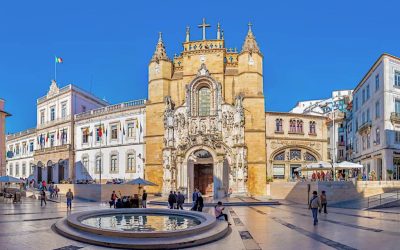
The Santa Cruz de Coimbra Monastery was built in the 13th century and is known for having been a prosperous institution and for its beautiful interior. It includes the tombs of Portugal’s Kings Dom Afonso Henriques that died in 1185 and Dom Sancho I that died in 1211.
The Sé Velha (Old Cathedral) is a major attraction. It dates back to the 12th century and it is a work of French masters Robert and Bernard and it is Portugal’s most well conserved Romanesque building. It underwent renovations and has gothic, manuelino and renaissance elements.
The Sé Nova (New Cathedral), built in the 17th century, was chosen as the new Cathedral of Coimbra in 1772.
Machado de Castro National Museum has extremely valuable art collections and is located in a former religious building that dates back to the 16th century.
Santa Clara-a-Velha Monastery is another huge city icon. It was founded on the 12th century Queen Elizabeth of Aragon who is a saint (Rainha Santa Isabel).
In the 17th century the Mondego River floods destroyed a large part of the monastery.
Nowadays it is possible to visit it and it is one of the city’s most interesting heritage.
Coimbra origins date back to the Celts. It also was an important Roman town. Interestingly, in the 12th century Portugal’s first King, Dom Afonso Henriques, designated Coimbra the nation’s capital. However it was changed to Lisbon in the 13th century.
The city regained its recognition in 1537 when King D. João III permanently relocated the nation’s university in Coimbra and many students came to live here and gave the city a new life.
In recent years the city has experienced an increasing growth and established itself as a main city in Portugal and a cultural hub.
Come and have A Truly Personalized Experience!
Portugal Expert ® Tourism – Vitor Pais – Copyright © 2009 – 2025. All rights reserved